
Sound familiar? These disconnected failures compound fast, hitting cost, quality, and delivery all at once.
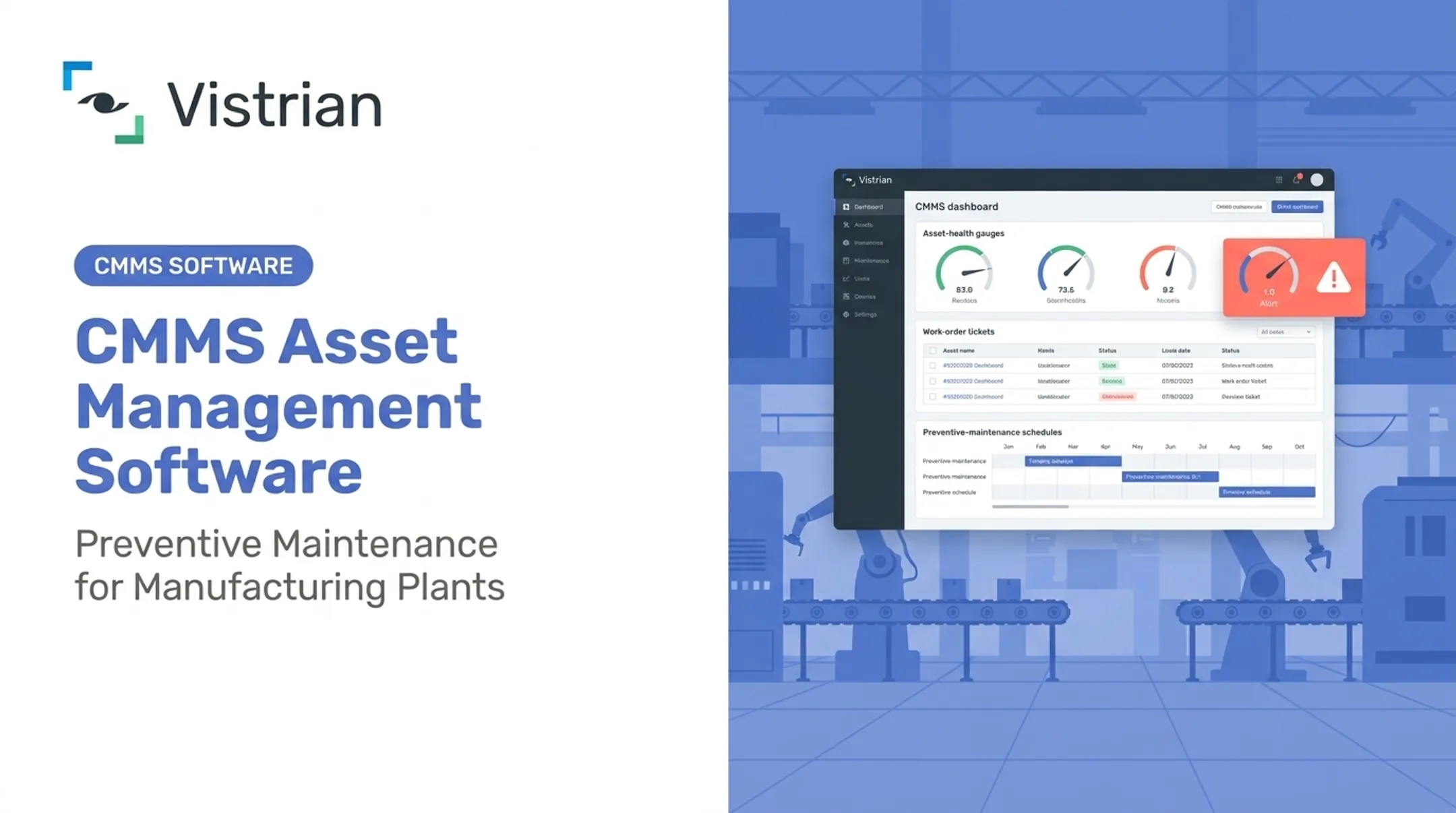
Manufacturing asset management is the systematic practice of planning, tracking, operating, maintaining, improving, and eventually retiring the physical and digital assets that keep production running. It's broader than "fixing things when they break." Done well, it connects equipment data, maintenance history, spare-parts inventory, and business decisions into one coherent picture.
This article breaks down asset types, lifecycle stages, maintenance approaches, supporting technology, key metrics, and a practical path to implementation.
Key Takeaways
- Asset management covers the full lifecycle of equipment, not just repairs after failure
- Strong programs link asset data, maintenance workflows, production performance, and spare-parts inventory
- Manufacturers should pilot with a small group of critical assets before scaling plant-wide
- Real-time visibility and predictive insights cut avoidable downtime and extend asset value
What Does Manufacturing Asset Management Include?
Manufacturing asset management is a coordinated approach for maximizing the availability, performance, safety, useful life, and financial value of the assets used to produce goods.
That's a wider mandate than maintenance alone. Maintenance management focuses on preserving or restoring equipment condition. Asset management also covers investment decisions, utilization tracking, lifecycle costs, risk, compliance, and end-of-life planning.
Assets typically fall into two buckets:
- Production equipment — CNC machines, robots, conveyors, pumps, motors, tooling, test equipment, and full process lines
- Supporting assets — facilities, utilities, material-handling equipment, spare parts, sensors, control systems, software, and equipment documentation
Physical equipment isn't the whole story. Digital records, inventory data, and financial information about those assets matter just as much — even though most organizations don't manage all of it in one system.
One more piece ties this together: asset criticality. Not every pump deserves the same attention as your bottleneck press. Criticality ranking determines which assets need constant monitoring, dedicated spare-part stock, redundancy, or accelerated replacement planning — and which ones can run on a lighter-touch schedule.
What Is the Difference Between Asset Management, CMMS, and EAM?
These three terms get used interchangeably, but they're not the same thing.
- CMMS (Computerized Maintenance Management System) handles day-to-day maintenance: work orders, preventive schedules, inspections, parts tracking, and labor history.
- EAM (Enterprise Asset Management) goes further, covering assets, resources, costs, risks, and lifecycle decisions across the organization.
- Manufacturing asset management is the operating discipline above both. CMMS, EAM, ERP, IIoT sensors, historians, and analytics tools are the systems that put it into practice.
Here's how that plays out on the floor:
- A vibration sensor flags an abnormal reading on a conveyor motor.
- The alert opens a work order in a CMMS such as VistrianMMS.
- A technician pulls the correct bearing from inventory, tracked in VistrianSMS.
- Downtime is logged automatically against the asset.
- After a third similar failure in six months, the history supports replacing the motor instead of repairing it again.
One asset-management process, five connected moments — spanning sensors, maintenance, spares, and lifecycle decision-making.

Why Manufacturing Asset Management Matters
Asset performance touches nearly every operational metric that matters: production throughput, product quality, schedule reliability, worker safety, energy consumption, and operating costs. When a critical machine goes down unexpectedly, the damage rarely stops at the machine itself.
Unplanned failures typically trigger a chain reaction:
- Missed production targets and rescheduled orders
- Emergency labor and overtime costs
- Expedited parts shipping at premium prices
- Scrap and rework on work-in-process
- Delayed customer deliveries
The maintenance workforce itself is under strain, too. Employment for industrial machinery mechanics and maintenance workers is projected to grow 14% between 2025 and 2035, with roughly 51,900 openings per year, according to the U.S. Bureau of Labor Statistics.
That growth means rising demand for the skilled technicians who keep production assets running. Manufacturers that don't equip those teams with better tools and data will feel the skills gap widen.
Lifecycle visibility sharpens capital decisions the same way. When you know an asset's failure frequency, downtime cost, and total cost of ownership, repair-versus-replace calls stop being guesswork. The same records support audits, safety reviews, and regulatory compliance. They also preserve institutional knowledge when experienced technicians retire.
Measure improvement against a baseline, using actual operational and financial KPIs. Broad efficiency claims without a starting point don't hold up.
How Manufacturing Asset Management Works Across the Asset Lifecycle
Manufacturing asset management is a connected sequence that runs from the moment a machine is specified to the day it is retired.
Planning and Specification
Define production needs before buying: required capacity, reliability targets, safety features, connectivity, and environmental requirements.
Purchase price is only one input. Weigh spare-parts availability, vendor support responsiveness, data access, and integration requirements alongside cost. A cheaper machine you cannot get parts for is not actually cheaper.
Acquisition and Deployment
This stage turns a purchase into a working asset on the floor:
- Vendor selection and purchasing
- Installation, commissioning, and configuration
- Acceptance testing and documentation
- Tagging and assignment to a line or facility
Capture these details before the asset enters routine operation:
- Asset ID and accurate nameplate data
- Manuals, warranty details, and failure codes
- Baseline performance readings
- Clear ownership assignment
Skip this step and you're troubleshooting blind six months later.
Operation and Performance Monitoring
Once the asset is running, operators and maintenance teams track:
- Runtime, status, and utilization
- Output quality and process conditions
- Alarms and abnormal behavior
Near-real-time visibility separates production losses from idle time, quality losses, and maintenance downtime. Those distinctions tell you where improvement effort actually pays off.
Maintenance and Improvement
Three maintenance approaches exist, each with different tradeoffs:
| Strategy | Approach | Cost per HP/Year* |
|---|---|---|
| Reactive | Run until failure, then repair | ~$18 |
| Preventive | Time or usage-based schedule | ~$13 |
| Predictive | Condition-based, using sensor data | ~$9 |
*Cost estimates from the U.S. Department of Energy's Operations & Maintenance Best Practices Guide.
Done well, predictive maintenance can cut costs 30–40% versus heavy reliance on reactive work. Top-performing plants keep reactive maintenance under 10% and favor preventive and predictive strategies.

The maintenance workflow typically runs in this order:
- Detect the issue or receive the request
- Plan, schedule, and stage parts
- Execute the work and close the work order
- Analyze the result
That last step matters most. Recurring failure analysis and root-cause investigation turn maintenance history into continuous improvement instead of a log of the same failure repeating.
Renewal, Retirement, and Disposal
Eventually, every asset reaches a decision point. Failure frequency, downtime impact, safety risk, energy use, and total cost of ownership inform whether to rebuild, replace, relocate, sell, or retire.
Decommissioning isn't just unplugging a machine. It should include data retention, environmental and safety procedures, parts disposition, system record updates, and a plan for replacing the lost capacity.
Technology, Implementation, and Best Practices
Connected technology makes asset management practical at scale. Typical building blocks include:
- CMMS or EAM platforms and ERP integration
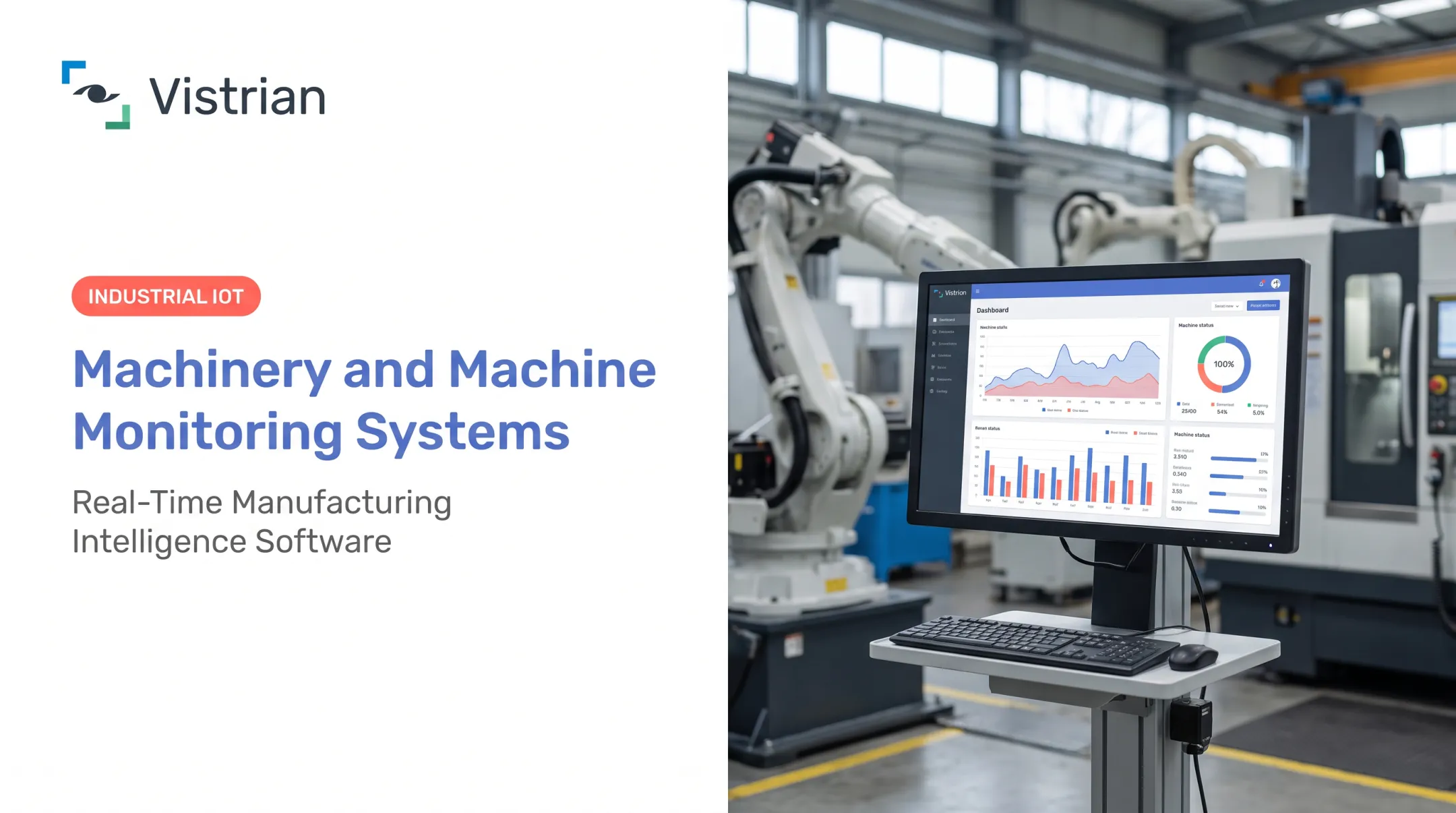
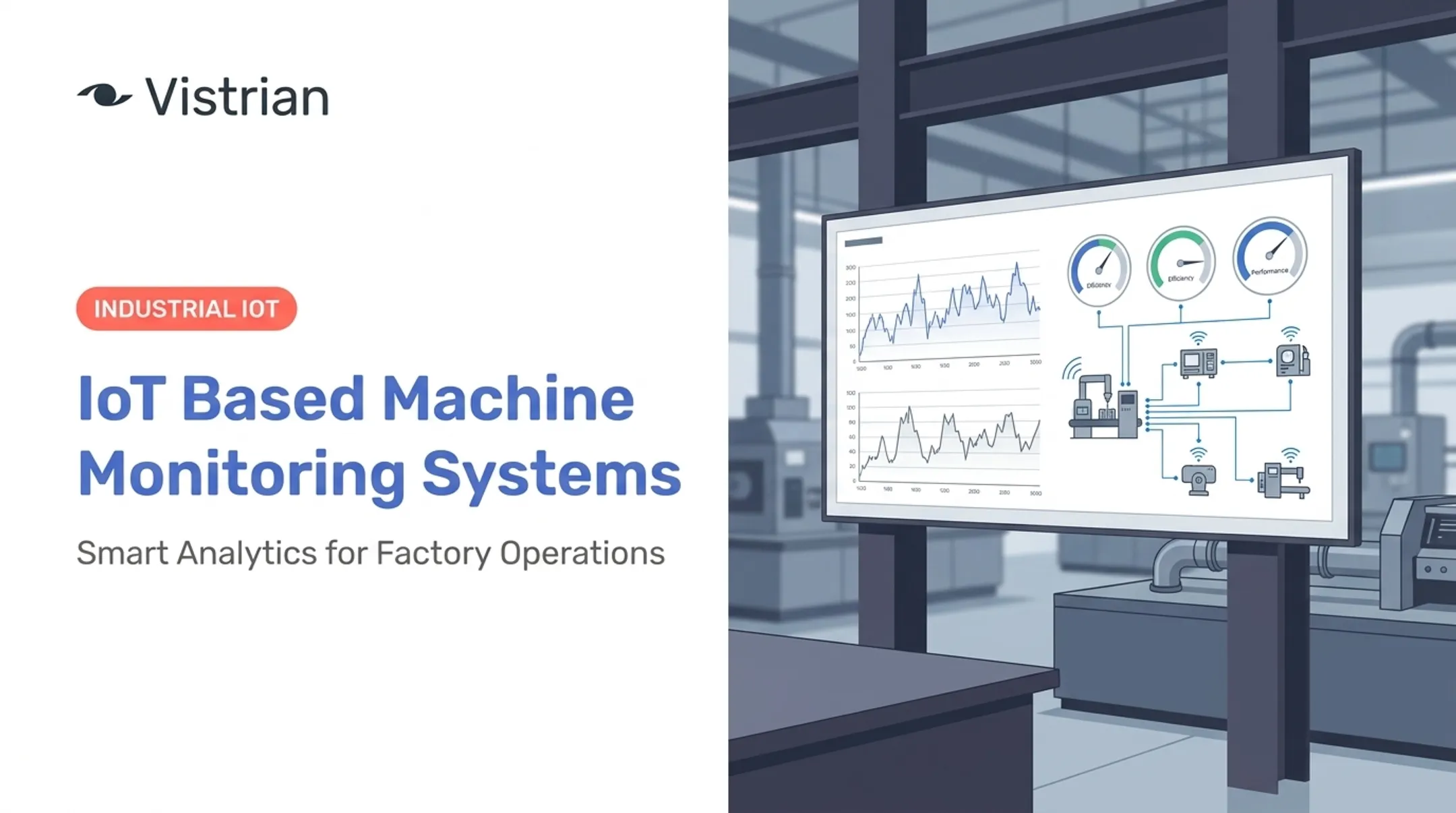
- Equipment controllers, historians, and IIoT sensors
- Dashboards, analytics, and mobile alerts The data flow follows a clear path:
- Machines and sensors generate raw information
- A platform contextualizes it by asset and process
- Analytics flag meaningful conditions or trends
- Workflows route the action to the right person Legacy equipment does not have to block progress. Plants can use standard protocols, existing logs and databases, gateways, or retrofit sensors on machines that lack modern digital interfaces. Once the technology stack is clear, rollout discipline matters as much as the tools themselves.
How to Implement a Manufacturing Asset Management Program
- Start with a measurable problem: recurring downtime on a bottleneck machine, poor spare-part visibility, or inconsistent multi-plant reporting
- Build a clean asset register: standardize names, IDs, locations, hierarchy, specifications, and criticality
- Set baseline KPIs and ownership before deployment: define what gets measured, how often, and what action follows an alert
- Pilot on high-value assets first, involve operators and technicians early, then expand once adoption and data quality hold up
- Run an integration checklist: cybersecurity, system compatibility, role-based access, training, mobile usability, and change management With a pilot plan in place, the next step is choosing platforms that can connect mixed equipment and turn plant data into action.

How Vistrian Can Support Connected Asset Visibility
Vistrian's Manufacturing Suite, built around FactoryLOOK, offers a modular, cloud-enabled way to collect equipment and process data from controllers, logs, databases, and IIoT devices. Core capabilities include:
- Equipment integration and historian functions
- Dashboards, alerts, and analytics
- Metrics such as OEE, utilization, throughput, yield, and cycle time In one implementation, FactoryLOOK extracted an average of 20 parameters per production tool at roughly one reading per second, combining SCADA and other software data on a single platform. For a North American cocoa processor, that visibility showed the real bottleneck was plumbing between refiners and holding tanks, not refiner wear. The finding helped the company avoid more than $1 million in unnecessary capital spending. For plants running older or unconnected machines, Vistrian Industrial IoT adds sensor connectivity without a full controller upgrade. On the maintenance side, VistrianMMS handles work orders, preventive scheduling, and spare-parts tracking, and it can use FactoryLOOK data to trigger condition-based maintenance.
KPIs and Common Challenges
Pick a balanced set of metrics rather than chasing every number available. A dashboard nobody understands is worse than no dashboard.
Equipment and maintenance KPIs worth tracking:
- Availability and utilization
- Overall Equipment Effectiveness (OEE)
- Downtime by cause
- Mean time between failures (MTBF) and mean time to repair (MTTR)
- Preventive-maintenance compliance
- Repeat failure rate
OEE deserves a specific note. It's calculated as Availability × Performance × Quality, and 85% is a commonly cited discrete-manufacturing benchmark, according to OEE.com. There's no single ideal score for every operation — that figure traces back to Japanese automotive plants in the 1970s and doesn't translate cleanly to every process type.
Inventory and lifecycle measures worth tracking:
- Critical-spare availability
- Stockouts
- Inventory carrying cost
- Asset age
- Repair-versus-replace cost
Define these consistently across shifts, lines, and plants, or your comparisons won't mean anything.
Even solid KPI lists fall short when the underlying data and workflows are weak. Common challenges manufacturers run into:
- Incomplete asset records and inconsistent failure codes
- Legacy system integration gaps
- Alert fatigue from poorly tuned notifications
- Limited skilled staff and workforce resistance to new tools
- Heavy dependence on reactive work
Practical mitigations that actually work:
- Start with critical assets only, not the entire plant
- Assign clear data owners for each asset category
- Train frontline users on the actual workflow, not just the software
- Validate alerts before rolling them out broadly
- Review results on a regular continuous-improvement cycle
Frequently Asked Questions
What are the five stages of asset management?
Common frameworks cover five stages: planning, acquisition, deployment, operation and maintenance, and disposal. ISO 55000 maps similar stages as conception, design, construct, operate/maintain, and dispose.
What are the five P's of asset management?
No single standardized "5 P's" framework exists across major asset-management bodies. Some organizations use variations such as planning, practice, people, information, and data. Always verify the framework a source uses before citing it.
What are the three main asset management types?
Common groupings include physical asset management, digital or IT asset management, and enterprise or financial/lifecycle asset management. Manufacturing typically centers on physical assets like equipment and machinery.
Is SAP an EAM system?
SAP provides EAM capabilities through products like SAP S/4HANA Asset Management and SAP Intelligent Asset Management. Exact functionality depends on the SAP module and implementation.
What is the difference between manufacturing asset management and maintenance management?
Maintenance management is one component of asset management, focused on keeping equipment running. Asset management also covers lifecycle planning, capital investment, risk, utilization, and retirement decisions.
How do manufacturers get started with asset management?
Start with a pilot on critical assets, build a clean asset register, assign clear data ownership, and establish baseline KPIs. Connect maintenance workflows to that data before planning a plant-wide rollout.